

How to Handle Irregular Ground, Surface Roots, and Sloped Yards in Minnesota
Minnesota yards can be beautiful, but they aren’t always easy to work with.
From uneven ground and low spots to tree roots pushing through the lawn and steep backyard slopes, homeowners throughout Minnesota face landscaping challenges that can make a yard difficult to mow, maintain, or simply enjoy.
The good news? An awkward yard doesn’t have to stay that way.
With the right approach to grading, excavation, drainage, soil preparation, and landscaping, many difficult yards can be transformed into functional, attractive outdoor spaces. At Fas-cut, we regularly work with properties throughout the Twin Cities and surrounding communities where the existing terrain presents challenges.
Here’s what to know about some of the most common problems—and how to address them.
1. Dealing With an Uneven or Irregular Yard
An uneven yard can develop for several reasons. Poor initial grading, settling soil, construction activity, tree roots, drainage problems, and Minnesota’s freeze-thaw cycles can all contribute to an irregular surface.
You may notice:
- Low spots where water collects after rain
- High areas that make mowing difficult
- Bumpy or uneven lawn surfaces
- Soil that continually settles in certain areas
- Water flowing toward your house or other structures
- Areas where grass struggles to grow
These aren’t just cosmetic problems. Low spots can create standing water, while poorly graded areas can send runoff toward foundations, patios, walkways, or other parts of the property.
The solution: proper grading
One of the most effective ways to correct an uneven yard is through professional grading.
Grading involves reshaping the existing soil so water moves where it is supposed to go instead of collecting in unwanted areas. University of
For homeowners, that can mean removing excess soil from high areas, bringing in quality fill where needed, and creating a smoother, more intentional grade.
The important part is that grading isn’t simply about making the yard look flat. The goal is to create a surface that is both attractive and functional.
A professional assessment can determine where soil needs to be removed, where additional material is needed, and how the finished grade should direct water.
2. What to Do When Tree Roots Are Growing Above the Ground
Surface roots are another common Minnesota landscaping problem.
Large trees can have extensive root systems that eventually become visible as soil erodes or as roots naturally grow closer to the surface. These roots can create bumps in the lawn, interfere with mowing, and make it difficult to establish healthy grass.
It can be tempting to simply cut or bury the roots.
That’s usually not the best solution.
Don’t automatically remove large surface roots
A tree’s major roots provide structural support and help supply the tree with water and nutrients. Removing significant roots can potentially damage the tree or compromise its stability.
Instead, the landscaping solution should take the tree into consideration.
Depending on the location and severity of the roots, options may include:
- Creating a larger planting bed around the tree
- Adding an appropriate layer of soil or mulch where appropriate
- Reshaping the surrounding lawn
- Installing landscape edging
- Replacing difficult turf areas with compatible groundcover
- Selectively removing a tree when it has become a significant safety or landscaping concern
The right solution depends on the specific tree, root system, surrounding grade, and intended use of the yard.
If roots are making an area difficult to mow or causing significant elevation problems, a professional landscaping assessment can help determine whether the area should be redesigned rather than simply covered up.
3. Managing a Yard With Too Much Slope
A sloped yard can be one of the biggest landscaping challenges for Minnesota homeowners.
A moderate slope may be manageable. A steep slope, however, can make mowing difficult, limit usable outdoor space, and increase the potential for soil erosion and runoff.
Water naturally gains speed as it travels downhill. On a long or steep slope, that runoff can carry soil with it and create erosion problems.
The solution: work with the slope
The answer isn’t always to eliminate the slope entirely.
In many cases, the best landscape design works with the existing terrain.
Depending on the property, solutions can include:
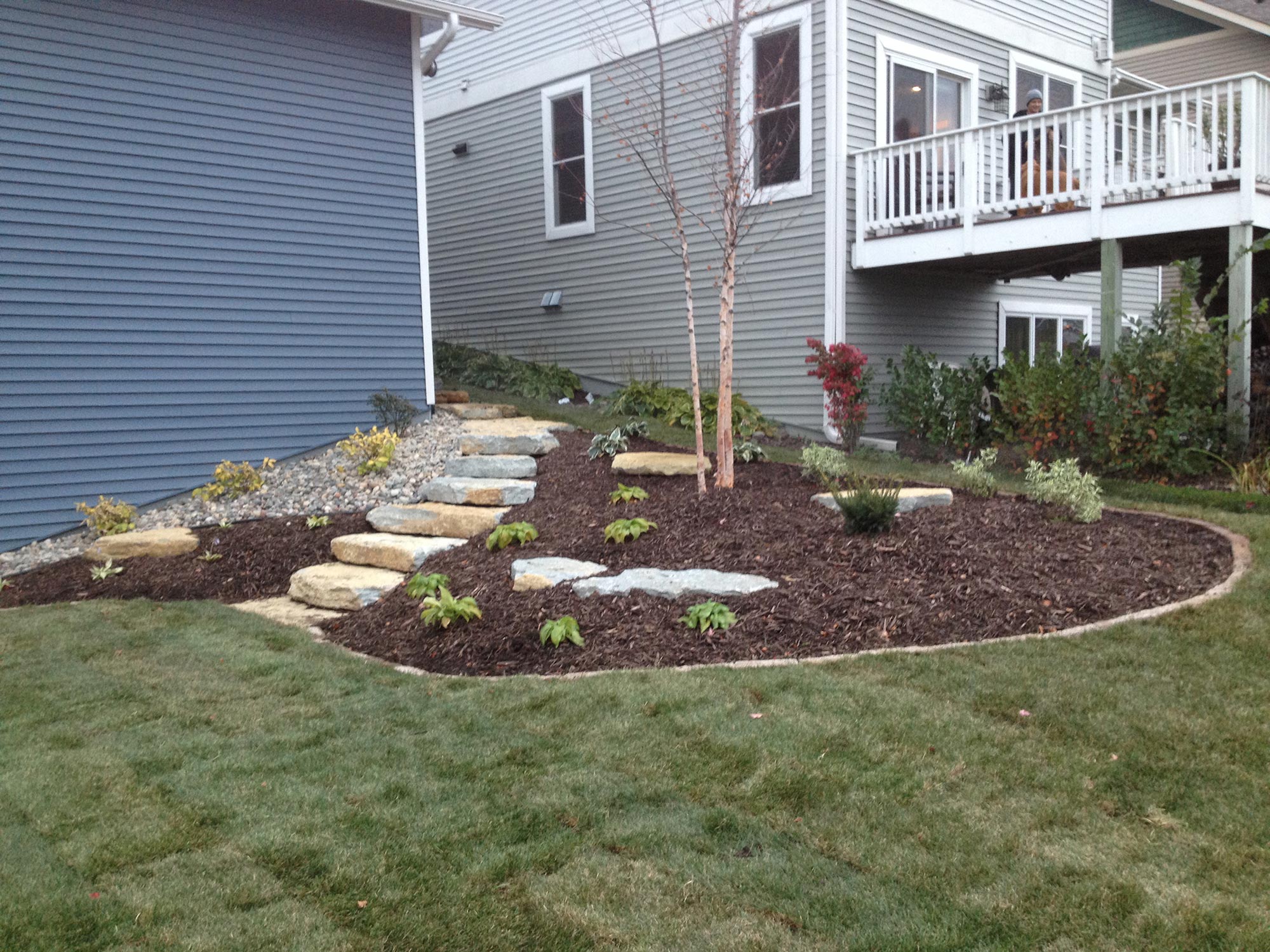
- Terracing
- Retaining walls
- Regrading portions of the yard
- Creating planting beds
- Installing steps or pathways
- Redirecting surface water
- Using erosion-resistant groundcover
- Creating usable lawn areas on sections of the property
Retaining walls can create usable space
A retaining wall can transform a steep, difficult section of yard into multiple usable levels.
Instead of one long slope, the property can be divided into more manageable sections. This can create room for a lawn, patio, garden, planting bed, or outdoor living area while also helping manage elevation changes.
Retaining walls aren’t simply decorative, though. They need to be designed and installed correctly, particularly when they are holding back substantial amounts of soil or dealing with drainage.
4. Don’t Forget About Drainage
One of the biggest mistakes homeowners can make when correcting an uneven or sloped yard is focusing only on the appearance of the ground.
Where does the water go?
That question should be part of every grading and landscaping project.
Minnesota receives significant seasonal precipitation, and spring snowmelt can put additional pressure on yards that already have drainage issues. Compacted soils can also reduce infiltration and drainage, making it harder for water to move through the soil.
A properly planned landscape should account for:
- Roof and downspout runoff
- Spring snowmelt
- Low areas of the property
- Existing drainage patterns
- Soil conditions
- Slopes and elevation changes
- Patios, driveways, and other hard surfaces
Depending on the situation, drainage improvements may involve regrading, creating a swale or drainage path, installing drainage systems, or changing the landscape layout.
The objective is simple: move excess water away from problem areas and toward an appropriate outlet.
5. Why Minnesota’s Freeze-Thaw Cycles Matter
Landscaping in Minnesota comes with a unique challenge: winter.
Soil freezes, thaws, becomes saturated, and freezes again. Over time, these seasonal changes can contribute to settling and shifting in the landscape.
That’s one reason a grading project shouldn’t be viewed as simply moving dirt around.
Proper soil preparation, compaction, drainage, and finish grading all matter. Resources emphasize that wet soil is particularly susceptible to compaction and that compacted soil has reduced infiltration and drainage.
A well-planned project considers what the yard will look like after the next winter, not just immediately after the equipment leaves.
6. Sometimes the Best Answer Is a Complete Yard Redesign
In some situations, an uneven yard, surface roots, and excessive slope are all symptoms of a larger landscaping problem.
Rather than addressing each issue individually, it may make more sense to rethink the entire space.
For example, a difficult backyard might be transformed by:
- Removing unwanted vegetation or trees where appropriate.
- Excavating and reshaping the existing terrain.
- Correcting problematic grades.
- Installing retaining walls where necessary.
- Improving drainage.
- Bringing in quality topsoil.
- Establishing new lawn areas.
- Adding planting beds, patios, walkways, or other landscape features.
This approach can turn a yard that is difficult to maintain into an outdoor space that is easier to use and enjoy.
When Should You Call a Professional?
If your yard has a few small bumps, minor lawn imperfections may be something you can address yourself.
Professional help becomes especially valuable when you are dealing with:
- Significant elevation changes
- Persistent standing water
- Water flowing toward a foundation
- Large surface roots
- Steep slopes
- Major soil erosion
- Retaining walls
- Excavation
- Drainage problems
- Large-scale landscape renovations
These projects involve more than making the ground look level. They require understanding how soil, water, vegetation, elevation, and structures interact.
Turn a Difficult Minnesota Yard Into a Better Outdoor Space
An uneven yard, exposed roots, or steep slope doesn’t mean you have to settle for a frustrating outdoor space.
With thoughtful grading, excavation, drainage improvements, retaining walls, and landscape design, challenging terrain can often become an opportunity to create a more functional and attractive property.
At Fas-cut, we help homeowners throughout Hastings, Cottage Grove, Afton, Woodbury, Rosemount, Farmington, Inver Grove Heights, and communities throughout the Twin Cities area tackle landscaping challenges of all sizes. Our services include landscape design, excavation, retaining walls, tree care, and more.
If your yard is difficult to mow, holds water, has exposed roots, or simply doesn’t work the way you want it to, it may be time to rethink the landscape.
Contact Fas-cut for a free consultation and let’s find a solution that works with your Minnesota property—not against it.
📍 Based in Hastings, MN
🌐 Visit: https://www.fascut.net/
📞 Contact Fas-cut today to schedule your estimate and discover how professional landscaping can transform your outdoor space.