

Why an In-Ground Sprinkler System Is a Smart Choice for Minnesota Lawns
Keeping a Minnesota lawn green and healthy isn’t always easy.
Our summers can bring stretches of hot, dry weather followed by heavy rain. Spring can be wet, while late summer can leave lawns stressed and dormant. Add Minnesota’s short growing season and winter extremes, and maintaining healthy turf requires good timing and consistent care.
For many homeowners, an in-ground sprinkler system can make lawn care significantly easier.
A professionally designed irrigation system doesn’t just save you from dragging a hose and sprinkler around the yard. It can deliver water more consistently, help prevent overwatering, and make it easier to give your lawn the moisture it actually needs.
At Fas-cut, we provide irrigation and sprinkler system installation and maintenance designed around the needs of individual properties. Here’s why an in-ground system can be a valuable investment for Minnesota homeowners.
Minnesota Lawns Need Water—but Not Too Much
One of the biggest misconceptions about lawn watering is that more water automatically means a healthier lawn.
It doesn’t.
We recommend watering deeply and infrequently rather than giving the lawn frequent, shallow watering. Depending on conditions, Minnesota lawns may need roughly ¼ to 1 inch of water per week, including rainfall.
The challenge is delivering that water consistently.
A homeowner might water one part of the lawn for 20 minutes, move the sprinkler, forget about it, and come back later. Other areas may receive too much water while areas farther away remain dry.
An irrigation system can be designed to distribute water across designated zones, making it much easier to provide consistent coverage.
The Problem With Watering Without an In-Ground System
A portable sprinkler can certainly keep a lawn alive. But for larger properties, using one can become a time-consuming guessing game.
Without an in-ground system, homeowners often have to:
- Drag hoses across the lawn.
- Move sprinklers from one area to another.
- Remember when each area was last watered.
- Monitor the weather and adjust watering manually.
- Keep track of how much water different areas receive.
- Deal with hoses that kink or leak.
- Avoid mowing around hoses and sprinklers.
- Spend significant time watering during dry periods.
- Remember to put equipment away when finished.
And there’s another problem: coverage isn’t always uniform.
A portable sprinkler may cover one section extremely well while leaving another section too dry. Trees, landscaping beds, fences, buildings, slopes, and irregularly shaped yards can make consistent watering even more difficult.
An in-ground system eliminates much of that daily hassle.
Water Where Your Lawn Needs It
One of the biggest advantages of an in-ground sprinkler system is the ability to divide your property into irrigation zones.
Different areas of a property don’t necessarily need the same amount of water.
A sunny portion of lawn may dry out faster than a shaded area. A landscaped garden bed may have different watering requirements than turf. Areas near trees may have different soil and moisture conditions than open lawn.
A professionally designed system can account for these differences.
Fas-cut’s irrigation services are designed around custom irrigation solutions that help provide plants and lawns with the right amount of water while conserving water where possible
That is much more effective than treating the entire property as though every square foot has identical watering needs.
Better Water Management Can Save Water
Installing an irrigation system doesn’t automatically mean using more water.
In fact, a properly designed and managed irrigation system can help homeowners use water more efficiently.
That’s an important distinction.
We recommend using practices such as soil-moisture sensors and adjusting watering based on actual conditions.
We recommend smart controllers, rain sensors, and soil-moisture sensors as tools for reducing unnecessary irrigation.
The goal isn’t to water your lawn more.
The goal is to water it better.
Smart Irrigation Helps Prevent “Set It and Forget It”
One of the biggest mistakes homeowners can make with an automatic sprinkler system is setting a schedule in the spring and never changing it.
Minnesota weather changes dramatically throughout the growing season.
A schedule that makes sense during a hot, dry stretch may be completely unnecessary after several days of rain.
Smart irrigation technology can help.
Rain sensors and soil-moisture sensors can prevent irrigation from running when the lawn already has adequate moisture. Smart controllers can also make it easier to adjust watering based on weather and landscape conditions.
This is especially important in Minnesota, where summer rainfall can vary significantly from week to week.
Consistent Watering Helps Maintain a Healthier Lawn
Your lawn is a living landscape.
It needs adequate moisture to maintain growth, recover from stress, and develop a healthy root system.
Inconsistent watering can contribute to dry, stressed areas. On the other hand, excessive watering can create its own problems.
Deep, less-frequent watering encourages roots to grow deeper into the soil, which can help turf better tolerate periods of drought.
An irrigation system makes it easier to establish a consistent watering routine without requiring you to spend your evenings moving a sprinkler around the yard.
An In-Ground System Saves Time
This might be the benefit homeowners notice first.
You don’t have to drag a hose through the yard.
You don’t have to stand outside moving a sprinkler.
You don’t have to remember which section you watered.
And you don’t have to interrupt your day every time your lawn needs water.
Once an in-ground system is installed and properly programmed, watering becomes part of the background maintenance of your property.
That gives you more time to enjoy your yard instead of maintaining it.
Better Coverage for Difficult Minnesota Yards
Not every lawn is a simple rectangle.
Many Minnesota properties have:
- Slopes
- Narrow side yards
- Large mature trees
- Landscaping beds
- Fences
- Multiple lawn sections
- Irregular property lines
- Areas with different sun exposure
- New landscaping or plantings
These characteristics can make portable sprinklers particularly inefficient.
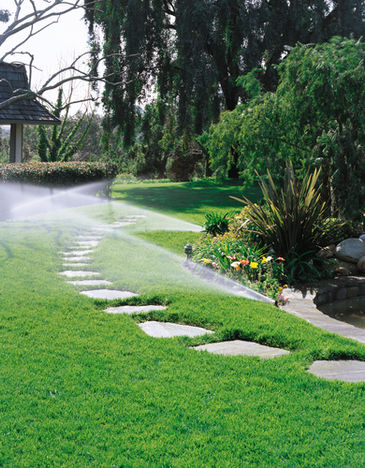
A professionally planned in-ground system can divide the property into zones and place sprinkler heads where they can provide appropriate coverage.
That can make a significant difference in the consistency of your lawn.
Less Runoff and Water Waste
When too much water is applied too quickly, the soil may not be able to absorb it efficiently. Water can run off rather than soaking into the root zone.
This is particularly important on sloped properties or compacted soils.
Improving water-use efficiency can reduce runoff and the movement of nutrients and other materials into drainage systems and groundwater.
Proper irrigation scheduling and system design can help reduce unnecessary runoff by applying water at an appropriate rate and frequency.
Again, the objective isn’t simply to put water on the lawn.
It’s to put the right amount of water in the right place at the right time.
Irrigation Is Especially Valuable During Minnesota’s Dry Periods
Minnesota doesn’t have a uniformly dry climate.
That’s part of what makes lawn watering challenging.
You may have weeks where rainfall keeps the lawn green with very little supplemental irrigation. Then a stretch of hot weather arrives, rainfall disappears, and the lawn begins showing signs of stress.
Without an irrigation system, homeowners may suddenly find themselves trying to catch up.
An in-ground system makes it easier to respond when supplemental watering is actually needed.
That can be particularly useful for newly established lawns, landscaping, gardens, and properties with areas that naturally dry out faster.
Don’t Forget About New Landscaping
An irrigation system isn’t only useful for established turf.
Newly installed lawns, trees, shrubs, flowers, and landscape beds can require consistent moisture while they become established.
If you’ve invested in a new landscape, letting plants repeatedly dry out during their establishment period can undermine that investment.
An irrigation system provides a reliable way to deliver water while allowing different areas of the landscape to be managed according to their needs.
What Happens When You Don’t Have a Sprinkler System?
For some homeowners, the biggest issue isn’t that the lawn can’t be watered.
It’s that watering becomes another chore that is easy to postpone.
You think:
“I’ll water it tonight.”
Then you’re busy.
Or it rains unexpectedly.
Or you forget which section you watered.
Or you discover that one part of the lawn is turning brown while another is still saturated.
Eventually, the lawn starts showing the effects of inconsistent maintenance.
An in-ground system doesn’t remove the need for responsible lawn care, but it removes much of the manual work.
Professional Installation Matters
An irrigation system is an investment, so installation quality matters.
A good system needs more than sprinkler heads placed throughout the lawn. The design should account for water pressure, coverage, zones, landscape layout, soil conditions, plant types, and areas with different watering requirements.
The system also needs regular inspection and maintenance.
In Minnesota, winterization is also essential. Irrigation systems generally need to be properly blown out before the ground freezes to prevent damage from freezing water. This typically occurs around the third or fourth week of October in much of Minnesota, although actual timing varies with weather and location.
An Irrigation System Is an Investment in Your Landscape
A healthy lawn doesn’t happen by accident.
Mowing, fertilization, weed control, aeration, soil health, and watering all play a role.
An in-ground irrigation system adds another important piece: consistent, controlled access to water.
For Minnesota homeowners, that can mean:
- A healthier, more resilient lawn
- More consistent watering
- Less time spent dragging hoses
- Better coverage
- Less guesswork
- Reduced risk of overwatering
- Better management of dry areas
- Easier care for new landscaping
- The ability to incorporate smart irrigation technology
- More time to enjoy your property
Let Fas-cut Take the Work Out of Watering
At Fas-cut, we understand that Minnesota landscapes require more than a one-size-fits-all approach.
We’re a family-owned and operated landscaping company based in Hastings, Minnesota, serving the Twin Cities and surrounding communities since 1993. Our services include landscape design, lawn maintenance, excavation, tree care, and irrigation and sprinkler systems.
Our irrigation services are designed to provide reliable watering while helping homeowners conserve water and maintain a healthy landscape.
If you’re tired of moving sprinklers, dragging hoses, guessing whether your lawn has received enough water, or watching dry spots develop during Minnesota’s summer heat, an in-ground sprinkler system may be the solution.
Give Fas-cut a call to discuss an irrigation system designed for your property.
A healthier lawn starts with the right amount of water—and the right irrigation system can make getting there a whole lot easier.
Why Fall Is a Great Time to Install a Sprinkler System
If you’ve been thinking about installing an in-ground sprinkler system, fall can be an excellent time to get the project started.
Minnesota’s fall weather is generally much more comfortable for landscaping work than the heat of summer. More importantly, Minnesota cool-season grasses are actively growing in the fall, with root growth benefiting from cooler soil temperatures.
Installing an irrigation system in the fall also means you can have the system designed and installed before the next growing season begins. Rather than waiting until spring—when landscaping companies are often busy with a long list of seasonal projects—you can get the installation completed and be ready to go when your lawn needs water next year.
There are several advantages to planning ahead:
- Get ahead of the spring rush. Installing in the fall means you aren’t waiting for an opening during the busy spring landscaping season.
- Be ready for next summer. Your irrigation system can be installed, tested, and prepared for spring startup.
- Take advantage of fall lawn growth. Minnesota’s cool-season grasses typically grow well during the fall, making consistent moisture particularly useful when rainfall is limited.
- Address landscaping needs at the same time. If you’re planning new lawn areas, planting beds, or other landscape improvements, irrigation can be incorporated into the overall design.
- Plan for efficient watering. A professionally designed system can be set up with appropriate zones, rain sensors, and other water-saving technology rather than relying on a portable sprinkler.
- Avoid another summer of dragging hoses. Instead of putting off the project until you’re struggling to keep up with watering, have the system in place before the next dry stretch arrives.
Fall can also be a good time to evaluate how your property handled the previous summer. If you noticed brown patches, dry areas, inconsistent growth, or parts of the lawn that always seem to need more water, those observations can help determine how an irrigation system should be designed.
Don’t Wait Too Late in the Fall
There is one important consideration for Minnesota homeowners: winter arrives quickly.
An irrigation system needs to be properly winterized before freezing conditions.
That means fall installation needs to be planned with enough time for the system to be installed, tested, and properly prepared for winter.
If you’re considering an irrigation system, don’t wait until the first hard freeze is approaching. Early fall is an ideal time to start the conversation with a professional.
By getting the project planned ahead of time, you can head into winter knowing your irrigation system is ready for spring—and your lawn will be ready for another Minnesota growing season.
📍 Based in Hastings, MN
🌐 Visit: https://www.fascut.net/
📞 Contact Fas-cut today to schedule your estimate and discover how professional landscaping can transform your outdoor space.